Cardiopulmonary resuscitation can make all the difference during the first few minutes of a cardiac arrest. Teaching cardiopulmonary resuscitation from an early age helps people recognise an emergency and overcome their fear of taking action. It also strengthens the public’s response and their connection with the work of emergency services and medical technology during emergency medical transport.
Education from early childhood
There is a moment, just after the accident, when time seems to stand still. Before the emergency services arrive, the first chance of help may lie with whoever is nearby, even if that person is a child.
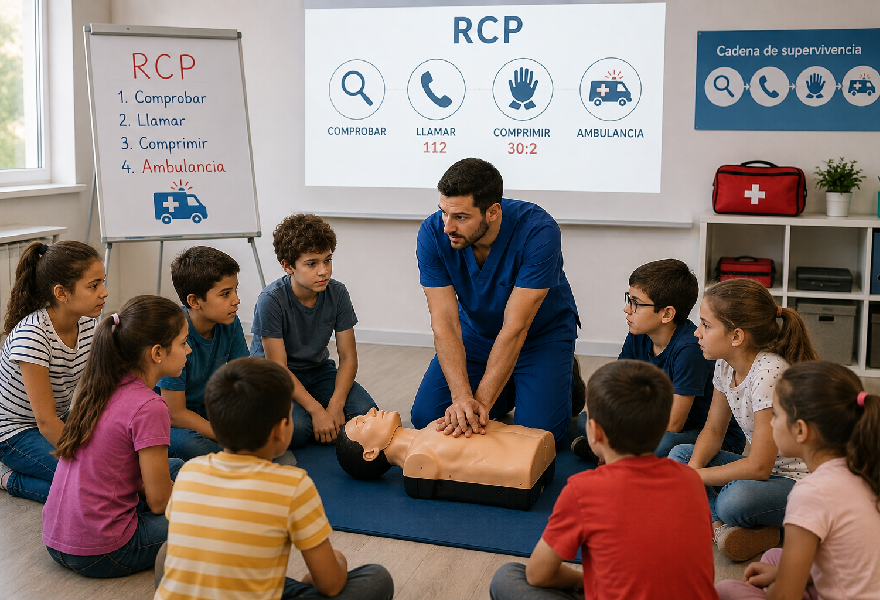
Training in cardiopulmonary resuscitation and first aid from early age aims to teach schoolchildren that, in an emergency, they do not have to freeze. The simple act of learning the emergency number 112 through a mnemonic tailored to young children can transform fear into a calm and organised response. Miguel Assala healthcare emergency technician, SAMUR paramedic and first-aid instructor, acknowledges on Carlos Roca’s ROCA PROJECT podcast that even the youngest children are capable of retaining this knowledge. Taking the right action starts with knowing who to call.
From the classroom to the home
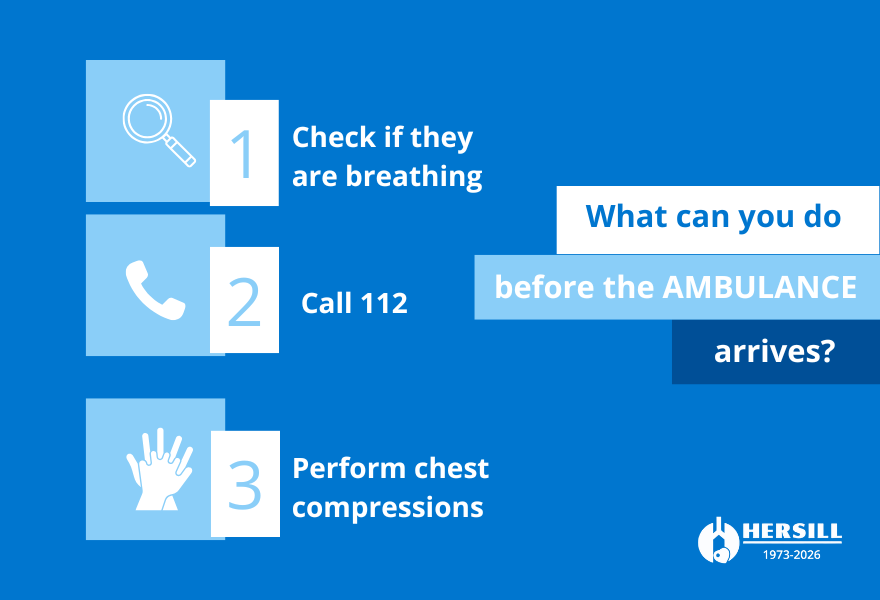
The training, which begins today with children, helps to clarify a sequence that might otherwise seem complicated: checking whether the person is responsive, calling for help, alerting the emergency services and beginning the first-aid procedures they have learnt. Knowledge doesn’t make the nerves go away, but it offers something to hold on to when every minute counts.
Assal points out that more and more people are aware of the importance of taking action in the event of a cardiac arrest, although there is still scope to expand training in cardiopulmonary resuscitation. “Out of 100 people, only 6 would know what to do if they saw someone suffering a cardiac arrest. If there were proper training sessions in schools or workplaces, between 12,000 and 15,000 lives would be saved simply because people had the knowledge,” he explains. Teaching CPR from an early age has an impact that extends beyond the pupil themselves; what is learnt in class often finds its way home in the form of conversation, a demonstration or a question. Children tell their parents about it, practise it with their siblings and share it with their classmates.
According to the newspaper *El Mundo*, pupils at IES Humanejos in Madrid demonstrated the value of this training when they came to the aid of a woman during a trip to Ireland. Their experience shows that young people do not have to be passive bystanders in an emergency. With the right training, they can become a vital link in the chain of survival.
Dr Francisco Reinoso, head of the Anaesthesia Department at La Paz University Hospital, highlights precisely this multiplier effect of CPR training. Training children and young people, he explains, means having people who can then teach their siblings, relatives and peers. This shared knowledge can ensure that “unfortunate incidents that might otherwise result in a patient’s death lead to several lives being saved”.
From public response to medical technology
The actions of those who witness an emergency set the response in motion, but it is the healthcare teams who must continue and consolidate the care provided.
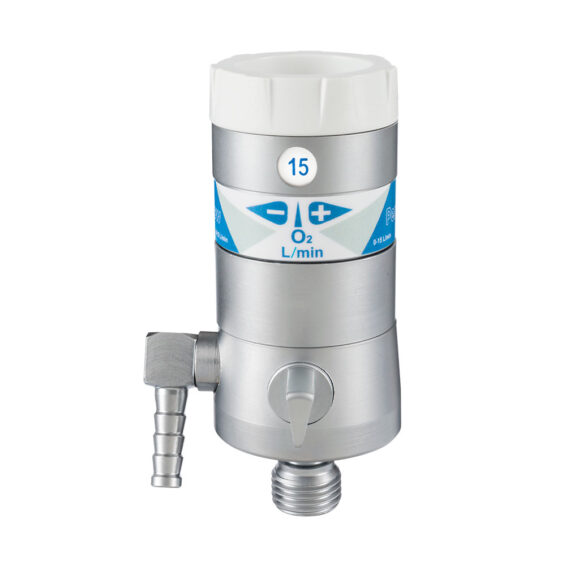
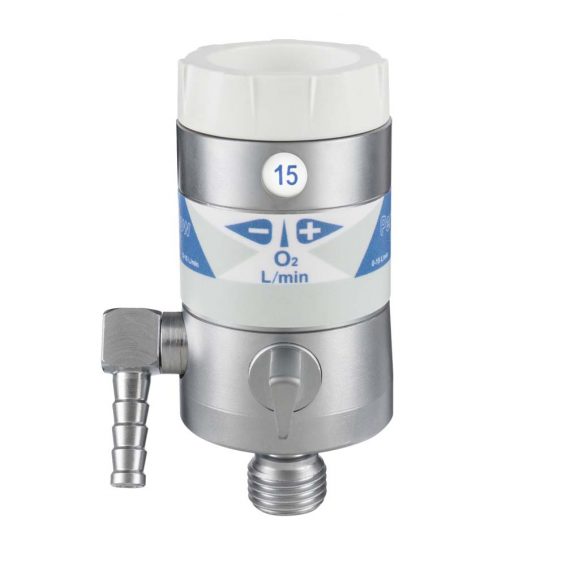
In this second stage, medical technology enables patient support to be maintained during pre-hospital care and transport. Solutions such as Hersill VITAE® 40 portable ventilator help healthcare professionals to provide continuous ventilatory support in a range of emergency scenarios. This device, developed for emergencies and transport, combines ventilation and monitoring functions in a compact design. Alongside these devices, the REVIVATOR® manual resuscitators enable manual ventilation and are available in versions suitable for adults, children and newborns.
The response to a cardiac arrest is, therefore, a joint effort: it begins with hands ready to act and is underpinned by the expertise of professionals and the support of medical technology.
Frequently asked questions about cardiopulmonary resuscitation
What is cardiopulmonary resuscitation?
Cardiopulmonary resuscitation, or CPR, involves a series of manoeuvres designed to temporarily maintain circulation and oxygenation in a person who has suffered a cardiac arrest.
Why should we learn CPR from a young age?
Because early training helps us to recognise an emergency, call for help and respond with greater confidence. It also enables us to pass on this knowledge to families and society as a whole.
What role does medical technology play in an emergency?
Medical technology helps professionals to continue the care that began at the scene of the emergency. Transport ventilators, for example, enable ventilatory support to be provided whilst the patient is being stabilised and transferred.