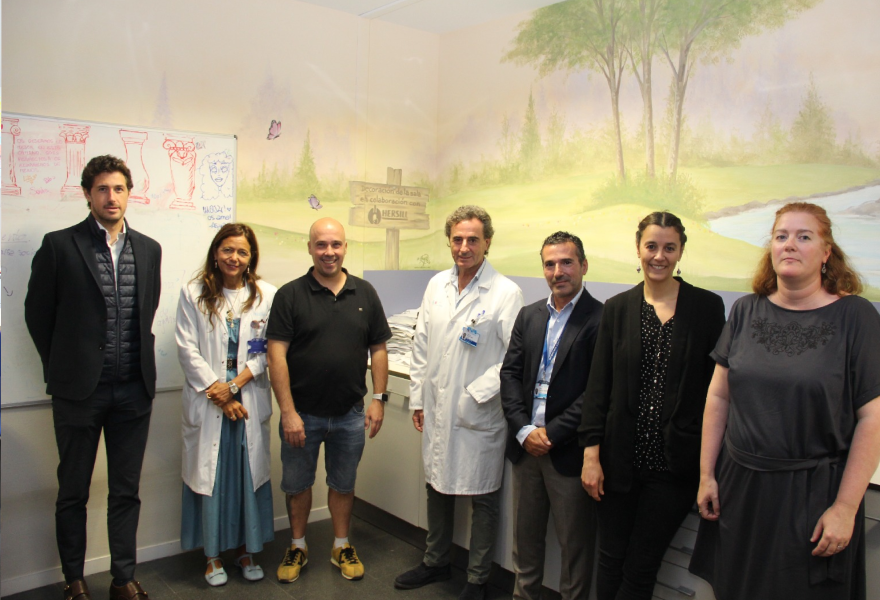
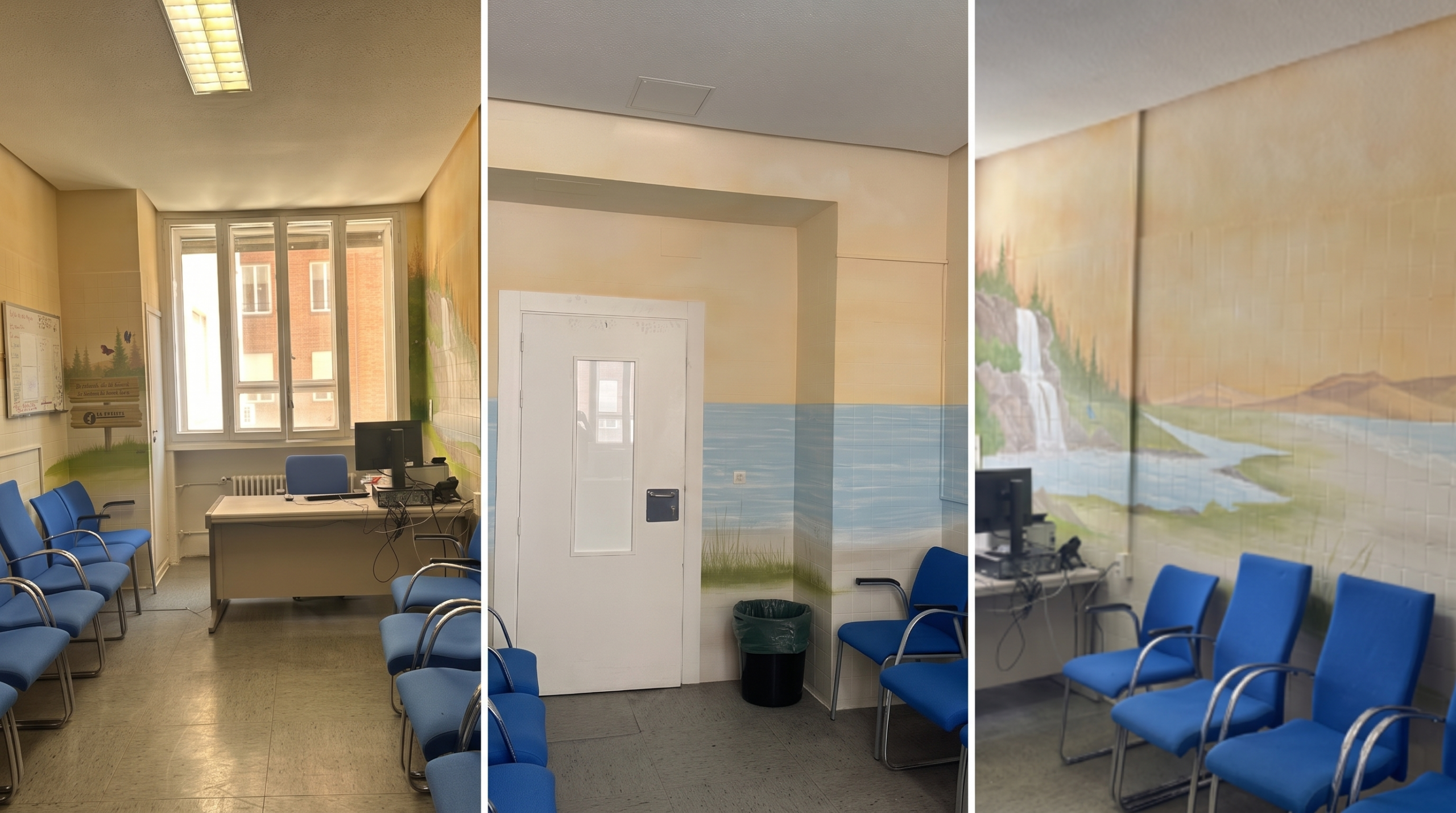
The spaces in which we receive healthcare also influence how we feel. Their design, the atmosphere they convey and the extent to which we feel comfortable in them are particularly important in the field of mental health. With this in mind, Hersill has had the opportunity to collaborate with the Hospital Clínico San Carlos in Madridon the refurbishment of two rooms in its Mental Health Day Centre, transforming them into immersive therapeutic spaces based on suggestions from the patients themselves, as part of the project ‘Imagine, a place to find yourself’.
The aim was to create two spaces that felt more intimate and welcoming, where patients could feel at ease during their treatment. And to achieve this, the first step was to listen to them. Their ideas, preferences and feelings served as the starting point for designing spaces that are now part of their daily lives.
The project has been developed in collaboration with the team of therapists at the Hospital Clínico San Carlos and has enabled us to take part in an initiative that highlights the importance of taking people’s emotional wellbeing into account in healthcare settings. As Oscar M. Jordán, CEO of Hersill, explains“we want to help create environments that take into account the people who use them and that can also support their emotional wellbeing. What excites us most about this workshop is seeing how patients have taken centre stage in their own space and how their ideas have ultimately shaped these rooms”.
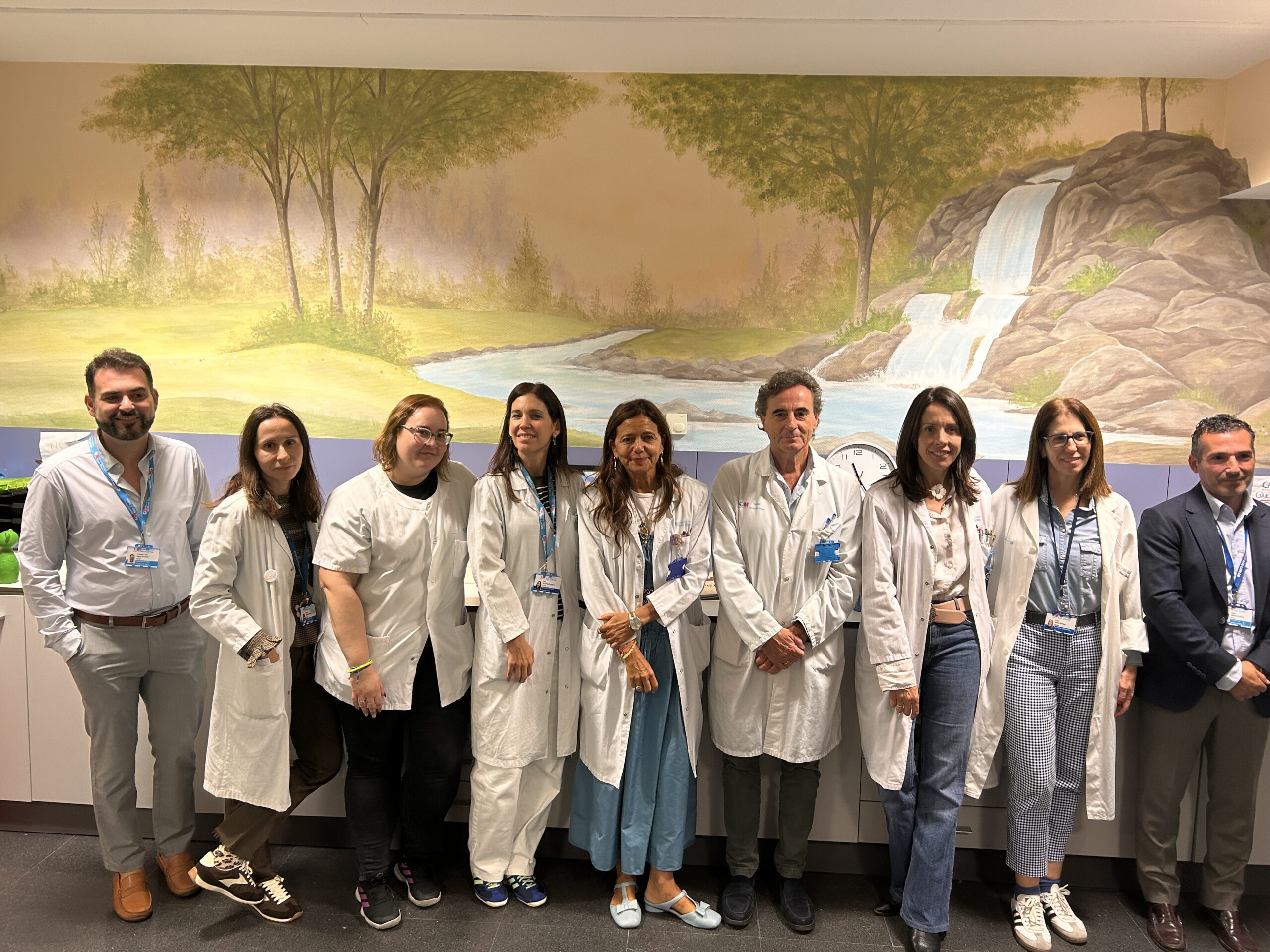
Speaking from the hospital, Rafael Garcia de la Morena, Head of Humanisation, Information and Patient Care at the San Carlos Clinical Hospital, emphasises the importance of having organisations that share his commitment to the humanisation of healthcare. “It is very important to have companies and organisations that share our commitment to the humanisation of healthcare. Our collaboration with Hersill enables us to carry out initiatives that have a direct impact on our patients’ wellbeing and experience.”
He also points out that when a space is designed in consultation with those who will live there – as has been the case with this project – “we ensure that it is not only more attractive or comfortable, but also more practical, more accessible and truly focused on people’s needs”.
Patients: key players in the design of the new spaces
It all began with a three-and-a-half-hour creative workshop, led by Victoria Manjon-Cabeza of Alabra Comunicacion, during which the patients were able to express how they imagined these spaces. They shared their concerns, emotions and hopes, and together they began to shape the ideas that would later be brought to life on the walls of the rooms.
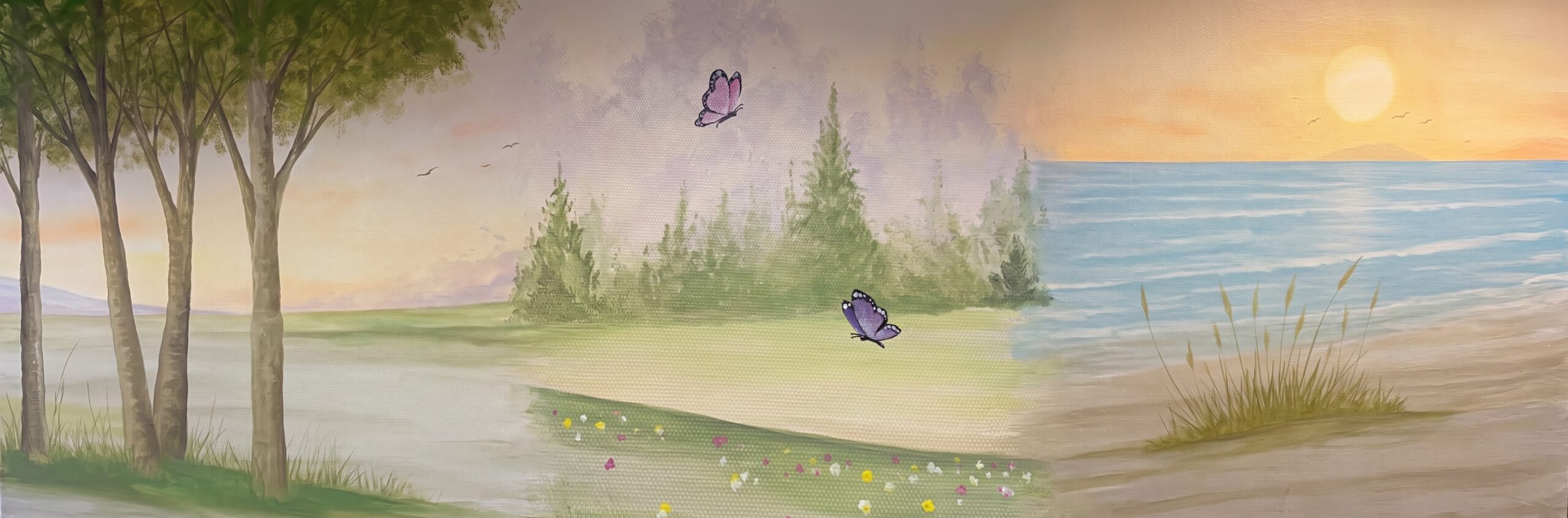
The next step was to turn these ideas into images. This task was undertaken by the graphic artist Campu, who spent more than four days creating two murals inspired by the landscapes imagined by the participants. Forests, rivers and the open sea represent different stages of a personal journey: introspection and growth, the journey itself, transformation and, finally, the possibility of finding calm, discovering new perspectives and moving forward into the future.
But the value of this experience goes beyond the artistic outcome. The workshop also provided an opportunity to develop creativity, self-esteem and social skills, to create spaces for emotional expression and stress relief, and to strengthen a sense of belonging. Above all, it offered patients the chance to have a say in decisions about an environment that forms part of their everyday lives.
As Sara Clemente, an occupational therapist at the Hospital Clinico San Carlos, explains, involving them in this process makes it possible to transform a space that may be perceived as hostile into “a safe and trusting place, where they are also listened to and taken into account”.
In the same vein, Dr Marina Díaz Marsa, Head of Department at the Hospital Clinico San Carlos and President of the Spanish Society of Psychiatry and Mental Health (SEPSM), points out that people with a mental health condition may experience anxiety, distress and mood swings. She therefore emphasises the importance of having welcoming environments that convey a sense of tranquillity and promote calm, thereby contributing to patients’ wellbeing and the progress of their therapeutic process.
We at Hersill would like to thank the Hospital Clinico San Carlos, its staff and everyone who has taken part in this initiative for the opportunity to be part of it. It has been particularly rewarding to see how the ideas shared by patients during the workshop have ended up being incorporated into the spaces they use every day.
An experience that reminds us of the importance of listening to people and also paying attention to those details within the healthcare environment that can help make care more personalised.
To find out more about the creative process and the participatory workshop that gave rise to this project,you can read our previous article:‘Imagine a space to find yourself: art as a means of humanisation’.
Frequently Asked Questions (FAQ)
What does the ‘Imagine, a place to find yourself’ project involve: how do patients’ suggestions bring new mental health spaces to life at the San Carlos Clinical Hospital?
This is a joint initiative between Hersill and the San Carlos Clinical Hospital, which has refurbished two rooms in the Mental Health Day Centre, transforming them into immersive therapeutic spaces designed in line with the patients’ ideas.
How were patients involved in the design?
They expressed their feelings and ideas during a three-and-a-half-hour creative workshop led by Alabra Comunicacion, which served as the basis for the final design.
Who brought the ideas to life in the murals?
The graphic artist Campu, who, over more than four days, created landscapes depicting forests, rivers and the sea, symbolising the process of personal recovery and transformation.
What benefits does it offer patients?
It makes the healthcare environment a safe and welcoming place, reduces stress, boosts self-esteem and improves social skills.
Who were the contributors to the project?
The team of therapists and the hospital’s Humanisation Unit, the company Hersill, Alabra Comunicacion and the artist Campu.