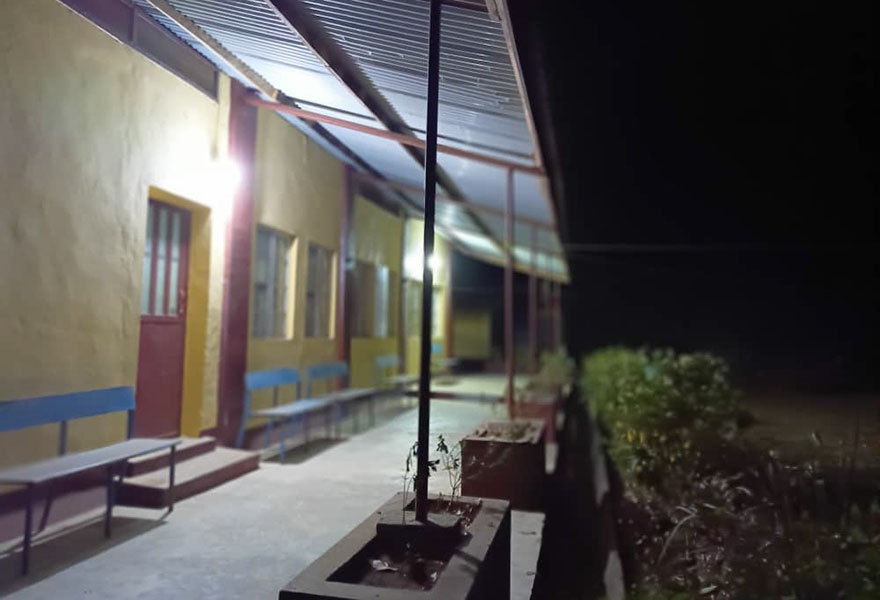
At Hersill, we are putting our vision of sustainability into practice through energy self-sufficiency at the Lungi Medical Centre in Sierra Leone. In collaboration with the Atabal Foundation, we have ensured a 24/7 electricity supply through photovoltaic systems, thereby improving living conditions, access to running water and the quality of service for the local community.
Our commitment to healthcare development in Lungi
At Hersill, we focus on projects that make a real and lasting impact on global health. Since 2023, we have been working alongside the Since 2023, we have been working alongside the The Atabal Foundation — an international aid organisation dedicated to improving living conditions in vulnerable areas — to enhance the capabilities of the Lungi Medical Centre and Home in Sierra Leone.
This project, which reached its final investment phase in 2026, reflects our commitment to meaningful and authentic initiatives.
The benefits of solar energy at the medical centre
The installation of solar panels and high-performance batteries has enabled the accommodation complex and medical centre to have a 24-hour electricity supply. This technical advance has brought about a change in the way the hospital operates.
In regions with unreliable electricity infrastructure, a hospital without power is a hospital with limited capabilities. In Sierra Leone, frequent power cuts often force hospitals to postpone surgeries or compromise the storage of vaccines. By installing solar power systems, we ensure that water flows from the taps, that operating theatres are lit in the middle of the night, and that life-support equipment never switches off.
The improvements achieved on the ground translate directly into:
- A continuous supply of running water in all rooms.
- Comprehensive improvements to accommodation facilities for patients, families, Poor Clare Missionaries and aid workers.
- Optimising healthcare provision, with a focus on improving support for women and children.
The Atabal Foundation emphasises: “We have managed to provide electricity 24 hours a day, which has improved the services on offer, both in terms of accommodation and the availability of running water in the rooms.” These improvements have not only had a positive impact on the quality of life of those using these facilities, but have also strengthened the centre’s ability to provide more efficient and higher-quality care.
A charity project successfully completed
The completion of this project, which involved an investment of €17,000 marks a turning point for the community. Thanks to this investment, the health centre now boasts a robust energy independence. This ensures continuous and sustainable improvement in the services it provides to the most vulnerable communities.
We are immensely proud to have joined forces to achieve this goal, leaving behind a legacy of sustainability that will continue to make a difference in the daily lives of thousands of people.
Let’s build a healthy future together
At HERSILL, we remain committed to innovation and corporate social responsibility in order to make access to decent healthcare a reality worldwide.
If you share our vision and have an international cooperation project, please get in touch with us via our contact form or browse our catalogue of medical products.
Frequently Asked Questions (FAQs)
What does the healthcare sustainability project in Sierra Leone involve? This involves the financing and installation of a solar panel and battery system at the Lungi Medical Centre to ensure an uninterrupted power supply 24 hours a day.
Which organisations are involved in this CSR project in Lungi? This project has been initiated and funded entirely by HERSILL, in close technical and logistical collaboration with the Atabal Foundation and the Poor Clare Missionaries.
What are the benefits of solar energy for hospitals in vulnerable areas? It provides a constant supply of light for medical emergencies, maintains the cold chain for medicines, ensures the supply of running water, and improves overall hygiene and living conditions.